

Embarking on the journey of memorizing the Holy Quran (Hifz) is one of the most rewarding pursuits a believer can undertake. The Prophet Muhammad (peace and blessings be upon him) said:
“The best among you are those who learn the Quran and teach it.” (Sahih al-Bukhari)
Yet, as every student of the Quran quickly discovers, the road to retaining all thirty Juz’ is rarely easy. It requires discipline, patience, and a system that counters forgetfulness and mental fatigue.
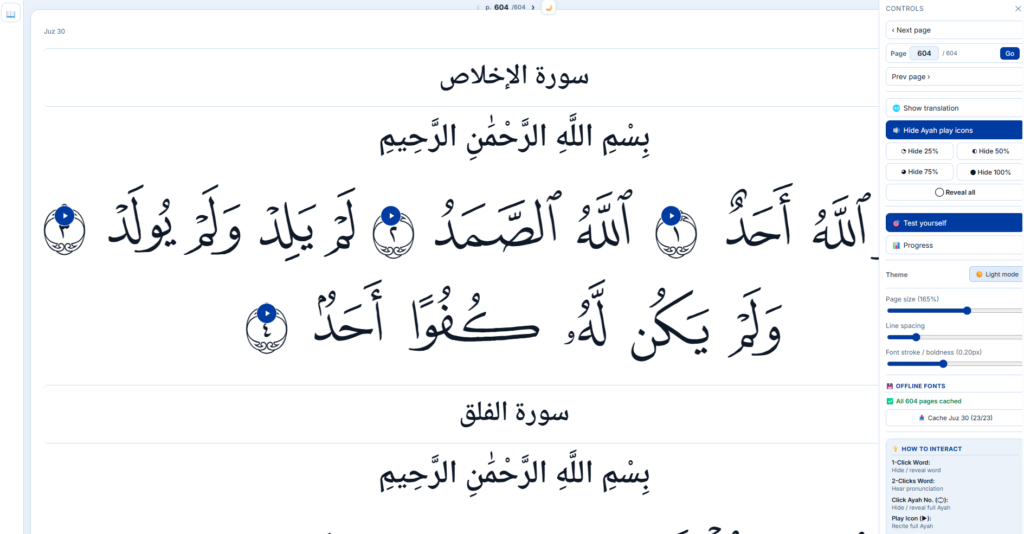
To bridge the gap between practical study struggles and sustained daily progress, we developed a dedicated, new Hifz online tool at quran.kalematquran.com.
Here is a closer look at the common roadblocks students face when memorizing, and how this platform was designed to solve them.
The Common Struggles Every Quran Student Faces
Memorization is rarely just a test of memory; it is a test of environment, technique, and stamina. Over time, students frequently hit several specific barriers:
1. Inconsistent Pronunciation and Unnoticed Tajweed Errors
One of the most dangerous traps in early memorization is repeating an Ayah incorrectly. Once a mispronounced letter, an omitted Ghunnah, or an improper vowel is memorized through repetitive practice, unlearning that mistake requires double the effort. Many learners practice alone at home without immediate, verse-by-verse auditory validation, cementing mistakes before their teacher can catch them.
2. Digital Distractions and Cluttered Tools
Modern Quran apps are often packed with features: translation toggles, tafsir commentaries, forums, social shares, notifications, and banner advertisements. While helpful for general study, these elements become visual clutter during active memorization. When memorizing, the human brain needs deep focus; visual interruptions break concentration and derail retention.
3. Eye Strain and Poor Font Readability
Traditional physical Mushafs use specific typography (such as the standard Uthmanic script) that memorizers rely on to build photographic memory of the page. Many digital tools use standard web fonts or compressed layouts where diacritics (Harakat) and stop signs (Waqf) blur together, leading to visual exhaustion and misreadings during long study blocks.
4. The Friction of Manual Rewinding
The classic method of Hifz demands hearing an Ayah 10, 20, or even 50 times in succession until the rhythm of the words embeds into the subconscious. Manually dragging an audio slider on a standard media player disrupts the flow, breaks mental rhythm, and wastes valuable revision time.
How quran.kalematquran.com Solves These Challenges
We built this tool with a single, clear objective: eliminate unnecessary friction and provide an uncompromising environment for memorization and revision.
Precise, Verse-by-Verse Auditory Reinforcement
Integrated with verified recitations sourced from trusted global archives—including EveryAyah and Quran.com—the tool enables targeted, Ayah-by-Ayah listening. Learners can hear the exact Tajweed and cadence of each verse instantly, ensuring correct articulation before committing words to memory. It acts as an accurate auditory baseline right beside your study desk.
Dedicated Typographical Clarity with Tarteel AI Fonts
Visual retention is just as vital as auditory retention. By integrating authentic Quranic fonts provided by Tarteel AI, the interface presents clean, elegant Uthmanic text. Every harakah, tanween, and sukūn stands out clearly, preventing misreadings and allowing the visual layout to anchor naturally in your mind.
Zero Ads, Zero Bloat: A Minimalist Focus Zone
There are no popups, marketing banners, or unnecessary distractions on the page. The interface is stripped down to the essentials: the sacred text, the audio playback, and the controls you need to repeat and internalize. This minimal design creates a calm, focused environment whether you study on a desktop monitor, tablet, or smartphone.
Free, Instant Access on Any Device
No logins, downloads, or paywalled features stand between you and your revision. Simply open quran.kalematquran.com in any modern web browser to resume your daily review, whether you have 5 minutes between errands or two hours before Fajr.
Practical Tips for Using the Tool in Your Daily Hifz Routine
To get the most out of your sessions on the platform:
- Listen Before You Speak: Play the verse 3 to 5 times while reading along visually to absorb the correct stops and articulation points.
- Read Aloud Alongside the Reciter: Match your voice to the cadence and pace of the audio to establish proper Tajweed rhythm.
- Recite from Memory, Then Verify: Close your eyes or look away to recite independently, then tap play to verify your accuracy immediately.
- Anchor the Connections: Use the tool to play the concluding verse alongside the next one to eliminate hesitations at Ayah boundaries.
A Sincere Request
This platform was developed as an ongoing effort to serve the students and teachers of the Quran worldwide. It is entirely free and open for everyone to use.
If this tool benefits your studies, your children, or your students, the only support requested is a sincere Dua (prayer) for the author, their family, and everyone who contributed to its development.
May Allah grant you steadfastness on your journey with His Book, preserve its words in your heart, and allow it to be an intercessor for you on the Day of Judgment.
Start your practice today: https://quran.kalematquran.com/